Ask around Boulder County right now and you will hear some version of the same rumor: the city just made backyard rental units easy money. Build a casita, skip the owner-occupancy requirement, skip the parking pad, and let the short-term rental income roll in.
Half of that is true. The other half is the opposite of what actually happened.
Boulder did loosen its accessory dwelling unit rules in a real and material way. What it did not do is open the door to Airbnb-style income on anything built from here forward. If you are evaluating a Boulder property with ADU potential, or already own one and are wondering what changed, the gap between those two facts is the whole story.
What the city actually changed, and when
On March 8, 2025, Ordinance 8650 took effect, eliminating three requirements that had shaped Boulder ADU projects for years: the owner-occupancy mandate, the off-street parking requirement, and the minimum lot size. The city also dropped side-entrance screening rules for attached units and the private open space requirement for detached ones. You can read the city's own summary of what's required now.
Boulder moved ahead of the state on this one. Colorado's HB24-1152, which forces most cities to allow ADUs by right, didn't take effect until June 30, 2025. Boulder had already gone further, four months earlier, through its own council vote. The city's coverage of that debate, including pushback from residents worried about traffic and density, is worth reading if you want the full local context, not just the ordinance text.
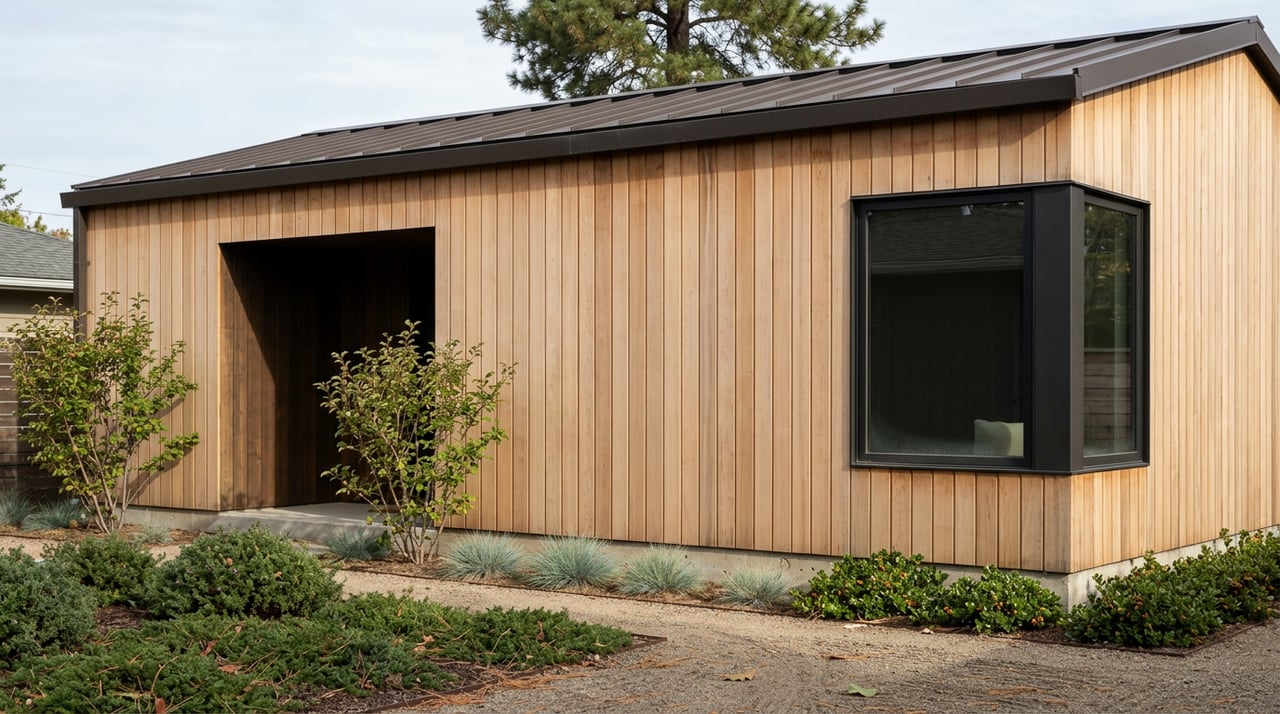
That change means you can now build a detached ADU on a Boulder single-family lot, rent out the main house to one tenant and the ADU to another, and never set foot in either one yourself. That part of the rumor is accurate.
The gate nobody mentions
Here's the part that gets left out of most conversations about this: short-term rental of a new ADU is not legal in Boulder, and the same regulatory push that freed up long-term rental closed that door tighter than before.
The rule is specific. To operate an ADU as a short-term rental, both the unit and its STR license must have existed before February 1, 2019. Build or convert an ADU today, and short-term rental is off the table, full stop. Owner-occupancy is still required for any active STR license, which is the opposite of the flexibility that now governs long-term rental.
The rule change that let you stop living on-site is the same rule change that made living on-site the only way to run a short-term rental.
The one exception worth knowing about is narrow. Boulder approved a "festival lodging" license in late 2025 that lets homeowners rent out a home or ADU for up to 29 consecutive days during designated special events, with the 2027 Sundance Film Festival as the reason it exists. That's a calendar-specific carve-out for a handful of weeks a year, not a workaround for the year-round STR restriction.
So if your investment thesis for a new Boulder ADU involves nightly rates and an Airbnb calendar, the math doesn't clear. The city didn't leave that path open. It closed it while opening the other one.
The math that actually works
Once you accept that a new Boulder ADU is a long-term rental, the numbers tell a more interesting story than the whole-property comparison usually does.
Boulder's citywide median sale price came in at $807,000 in February 2026, and rent benchmarks across the city ran roughly $1,850 to $2,460 a month as of April 2026, depending on property type and size. Run those two numbers against each other and you land on a gross annual yield of about 2.8% to 3.7% before taxes, insurance, HOA dues, maintenance, and vacancy. That's the number that makes Boulder a thin cash-flow market for anyone buying a whole rental property outright, and it's the reason most serious investors here are underwriting appreciation and long-term hold value, not monthly cash flow.
An ADU changes that equation because it changes the denominator. A detached Boulder ADU typically costs $160,000 to $320,000 to build, with garage conversions running $80,000 to $180,000 and prefab units landing around $120,000 to $270,000. ADU rents tracked through mid-2026 run $1,600 to $2,600 a month, with units near campus or Pearl Street pushing toward the top of that range.
Take a straightforward example: an ADU that rents for $1,900 a month brings in about $22,800 gross a year and roughly $17,400 net after typical expenses. Against a $200,000 construction cost, that's an 8.7% net yield, more than double the citywide gross yield on a whole property. Against the low end of the construction range, it's better still.
That's the actual opportunity in this rule change. Not a short-term rental play, and not a way to beat the Boulder market's thin cash flow on a whole-house basis. It's a way to add a second income stream to a lot you already own, or are already buying, at a cost basis and yield that look nothing like the citywide comparison.
One line item that catches people off guard in the budgeting stage: detached ADUs require an automatic fire sprinkler system connected to a dedicated bypass water meter, which typically adds $8,000 to $15,000 to the project. It's a real cost, and it belongs in the pro forma from day one, not discovered mid-permit.
| Long-term rental (post-March 2025) | Short-term rental | |
|---|---|---|
| Owner-occupancy required | No | Yes |
| Eligible for new ADUs | Yes | No, unless unit and license predate Feb. 1, 2019 |
| Parking requirement | None | N/A |
| Typical monthly income | $1,600–$2,600 | Not a legal option for new construction |
Where the roommate rule fits
The other change worth understanding runs alongside the ADU story, not inside it. Colorado's HB24-1007, signed in April 2024, prohibits cities from limiting how many unrelated people can live together in a home. Boulder's own page on the change confirms the city stopped enforcing its old unrelated-persons cap in response, and adopted Ordinance 8651 in March 2025 to bring local code in line.
That doesn't mean unlimited occupancy. It means the ceiling moved from a headcount rule to a habitability one. Under the International Property Maintenance Code the city adopted for this purpose, bedrooms must be at least 70 square feet, with 50 square feet required per occupant in rooms shared by more than one person. Egress and window requirements still apply, and enough bathroom and kitchen capacity has to exist for the number of people living there. Boulder Reporting Lab's coverage of the original proposal to scrap the occupancy limits lays out how the city arrived at that framework and why fair housing concerns pushed the old family-based definitions out of the code entirely.
For anyone evaluating a property with roommate-style rental potential, the practical takeaway is that bedroom count and code compliance, not a legal cap on occupants, now determine how many people you can legally house. A three-bedroom home with code-compliant egress in every room supports more legal occupants today than it would have two years ago. A property with undersized bedrooms doesn't get more flexible just because the headcount rule disappeared.
When you try to scale, the rules change again
One ADU on a lot is a straightforward project under the current code. Try to go further, and Boulder's inclusionary housing requirements start to matter. Developments of five or more units must set aside 25% as affordable housing, and developments of four or fewer contribute 20%. That threshold can materially change the feasibility of a redevelopment or infill project that looked simple on paper, and it's worth pricing in before you're under contract, not after.
The bottom line for Boulder buyers
If you're weighing a Boulder property with ADU potential, the deregulation story is real, but it points somewhere narrower and, in some ways, better than the Airbnb rumor suggests. Long-term rental of both the main house and an ADU is now flexible and straightforward. Short-term rental of anything built or converted since early 2025 is not on the table. And the ADU itself, priced against its own construction cost rather than against Boulder's overall median, can outperform the citywide rental yield by a wide margin, precisely because it's the one path the new rules were actually built to support.
FAQ
Can I still short-term rent my primary home while renting the ADU long-term? The STR restriction attaches to whichever unit is being rented short-term. If your primary home's STR license and use predate February 1, 2019, that grandfathering may still apply to the house even if the ADU itself only supports long-term rental.
What happens with the festival lodging license outside of Sundance? The license, approved in late 2025, applies only to homeowners renting during city-designated major events, with the 2027 Sundance Film Festival as the driving example. It doesn't extend to year-round short-term rental, and it sits alongside separate city rules adopted in 2026 governing how large festival events themselves are permitted.
Does adding an ADU always help resale value? Boulder homes with ADU-ready lots or existing ADUs tend to draw more buyer interest given the income potential, but resale impact depends on lot configuration, neighborhood, and how well the unit is built and permitted. It's a factor worth discussing property by property, not a blanket guarantee.
If you're weighing a Boulder property for its ADU potential, or trying to figure out what a lot you already own could support under the current rules, that's exactly the kind of decision The Bernardi Group walks through with buyers and owners every week. Start Your Strategy Session and let's run the numbers on your specific property before you commit to a plan.