By The Bernardi Group
Gardening in Boulder County rewards beginners who understand the local conditions, and those conditions are different from what most gardening guides assume. At roughly 5,000 to 5,500 feet of elevation across Boulder, Louisville, Lafayette, and Longmont, the growing season is shorter, the sun more intense, and the soil more challenging than at lower elevations. With the right approach, a home garden here is achievable and one of the most satisfying investments in your property and daily life.
Key Takeaways
- Boulder County's high elevation means a shorter frost-free window, so knowing your last and first frost dates is the foundation of a successful garden plan
- Raised beds solve two of the most common gardening challenges in Boulder County: rocky or clay-heavy native soil and the need to extend the growing season with better drainage
- Water-wise gardening is both a practical and environmental priority in Colorado's semi-arid climate, and many high-yield plants thrive with far less water than traditional gardens require
- The Boulder County Master Gardener program offers free and low-cost resources that can dramatically shorten the learning curve for new gardeners in the region
Know Your Growing Season
The average last frost in Boulder falls in early to mid-May, and the average first fall frost arrives in late September to early October, giving gardeners roughly four to five months of frost-free growing time. In higher-elevation areas like the foothills above Boulder, that window is shorter still.
This is a planning parameter, not a limitation. Tomatoes, peppers, and squash need to start indoors weeks before the last frost and transplant outside once soil has warmed. Cool-season crops like kale, lettuce, and radishes can go in the ground earlier and again in late summer for a fall harvest.
Timing Tips for Starting a Garden in Boulder County
- Start warm-season crops like tomatoes and peppers indoors six to eight weeks before the average last frost date, which typically puts that start in mid-March in most Boulder County communities
- Transplant warm-season starts outside only after nighttime temperatures are consistently above 50 degrees Fahrenheit — soil thermometers are inexpensive and worth using rather than guessing
- Direct-sow cool-season crops like lettuce, spinach, carrots, and radishes in early to mid-April, as they tolerate light frost and benefit from cooler spring temperatures
- Plant a second round of cool-season crops in late July or early August for a fall harvest before the first frost, making use of the full growing window on both ends of the season
Start With Raised Beds
Native soil in many Boulder County communities, particularly newer construction in Erie, Superior, and parts of Lafayette, is heavy clay that drains poorly and compacts easily. Rocky substrate is common in established Boulder neighborhoods. Raised beds filled with a quality growing mix sidestep both problems.
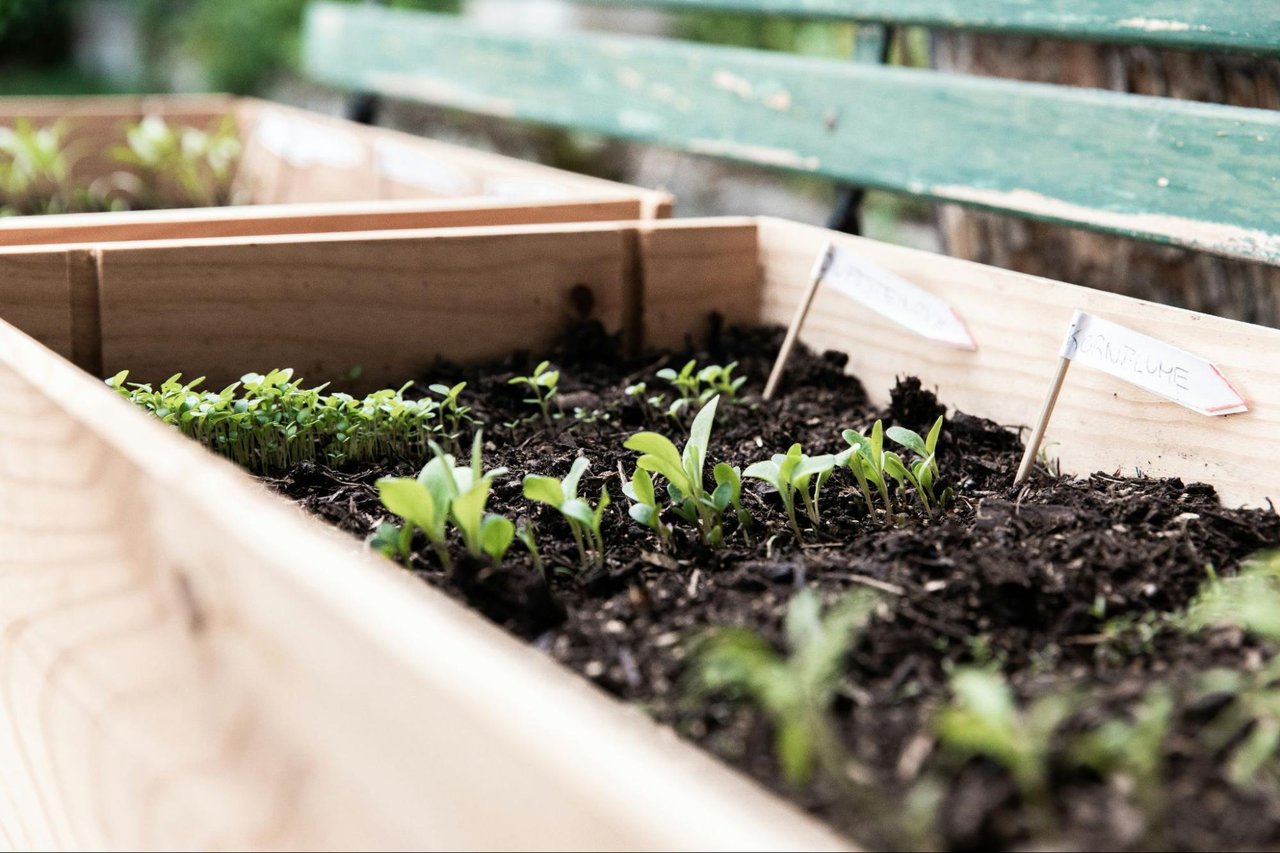
An eight-inch raised bed is sufficient for most vegetables. Filling with a blend of compost, topsoil, and perlite creates a growing environment with the drainage, aeration, and nutrients native soil often lacks. Raised beds also warm faster in spring, which is a meaningful advantage in Boulder County's shorter season.
What to Know When Building Your First Raised Beds in Boulder County
- Use untreated cedar or redwood for raised bed construction, since these species resist rot naturally without chemical treatment that can leach into soil and plants
- Fill with a blended growing mix of one part compost, one part topsoil, and one part perlite or coarse sand for drainage
- Position beds where they receive at least six to eight hours of direct sun
- Start with one or two beds rather than building out a full garden immediately
Water Wisely From the Start
Summer rainfall in Boulder County is unpredictable, and irrigation is a necessity rather than a supplement. Deep, infrequent watering produces stronger plants than frequent shallow watering.
Drip irrigation is the most efficient delivery method for a raised bed garden. A basic drip system with a timer reduces water use compared to overhead sprinklers while delivering moisture directly to the root zone. Mulching the soil surface with straw or wood chips further reduces evaporation through Colorado's intense summer sun.
Water-Wise Gardening Practices for Boulder County Beginners
- Install drip irrigation in raised beds from the start to reduce water use, prevent foliar disease from overhead watering, and make consistent moisture management far easier
- Mulch the soil surface with two to three inches of straw or wood chips to reduce evaporation, moderate soil temperature, and suppress weeds that compete with vegetables for water
- Water in the morning rather than the evening, which allows foliage to dry during the day and reduces the humidity conditions that fungal diseases prefer
- Choose drought-tolerant herbs like rosemary, thyme, oregano, and lavender for sections of the garden where regular irrigation is less practical since these plants are well-suited to Colorado's climate
Choose the Right Plants for the Local Climate
Plant selection is where many Boulder County beginners go wrong. The practical approach is starting with varieties known to perform well in Colorado's high-elevation, semi-arid conditions.
Colorado State University Extension maintains research-based plant recommendations for Front Range gardeners, and the Boulder County Master Gardener program offers free resources and consultation. For beginners, proven producers — bush beans, zucchini, kale, chard, cherry tomatoes, and herbs — build confidence and soil health simultaneously.
Plants and Varieties That Perform Well in Boulder County Gardens
- Cherry tomato varieties like Sungold, Sweet Million, and Black Cherry ripen reliably within Boulder County's frost-free window where larger slicing varieties sometimes fall short
- Kale, chard, and spinach are productive from early spring through hard frost and tolerate temperature swings that challenge more temperature-sensitive crops
- Zucchini and summer squash are among the most productive vegetables in Colorado's sunny summers
- Fresh herbs including basil, parsley, cilantro, and dill grow readily in raised beds and produce abundantly through the summer, making them among the highest-value crops per square foot for a beginning gardener
FAQs
Where can I find local gardening resources and support in Boulder County?
The Boulder County Master Gardener program, operated through Colorado State University Extension, offers free garden consultations, plant clinics, and educational events throughout the growing season. Community gardens in Boulder, Louisville, and Longmont offer plot rentals that give beginners hands-on experience before investing in their own garden infrastructure.
When should I start seeds indoors in Boulder County?
For tomatoes and peppers, starting indoors six to eight weeks before the average last frost gives transplants enough size to establish quickly after moving outside. Refer to the seed packet for specific timing and adjust for your elevation and microclimate.
How do I improve native clay soil in Boulder County without raised beds?
Incorporating large volumes of compost is the most effective approach. Organic matter improves drainage, aeration, and microbial activity simultaneously. It takes multiple seasons of consistent amendment to meaningfully transform native clay, which is one reason raised beds are the recommended starting point for most beginners.
Contact The Bernardi Group Today
In communities like Boulder, Louisville, Lafayette, and Longmont, outdoor living and connection to the natural environment are part of what makes Boulder County such a desirable place to own property. Whether you are planting your first garden or searching for a home with the outdoor space to support the lifestyle you want, we are here to help.
Reach out to us at The Bernardi Group to start the conversation. Our knowledge of Boulder County's communities and properties runs deep, and we are glad to put it to work for you.