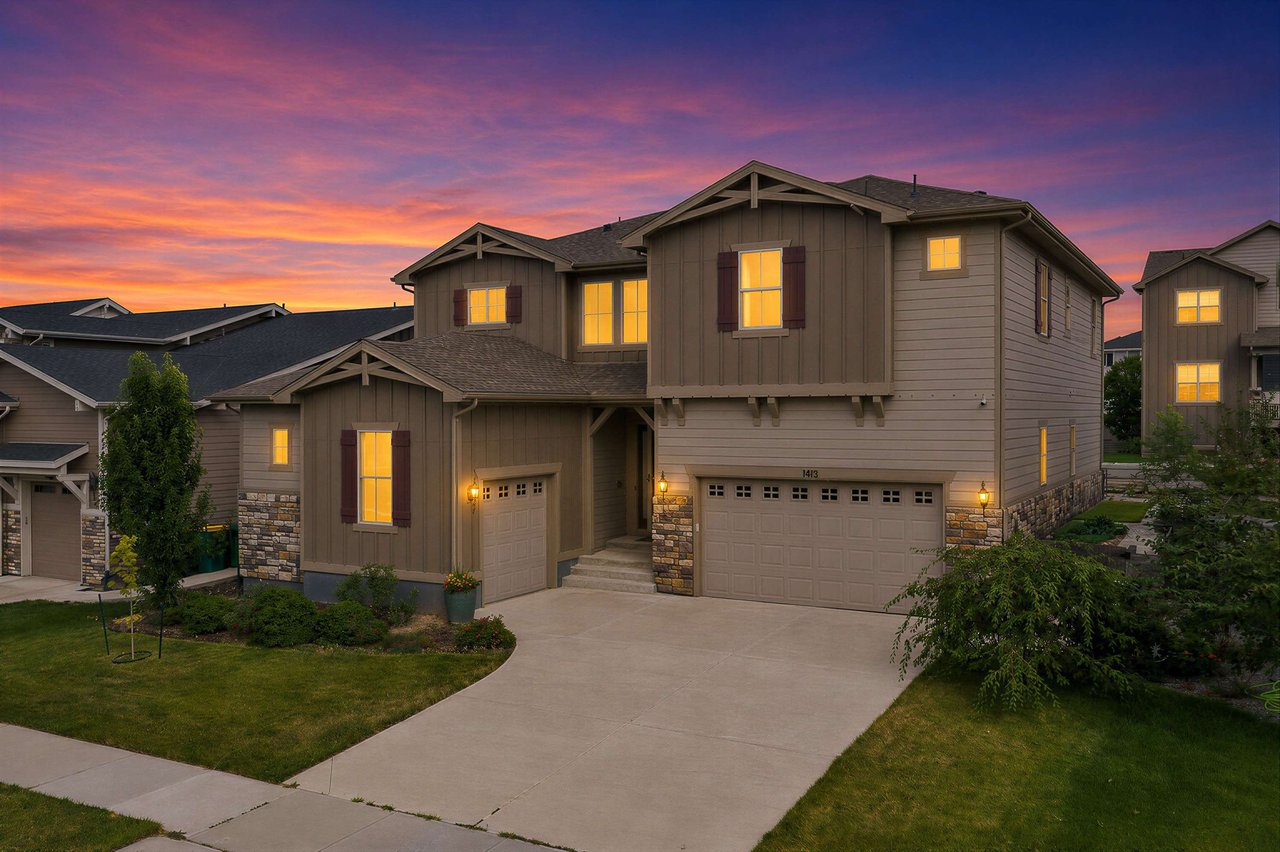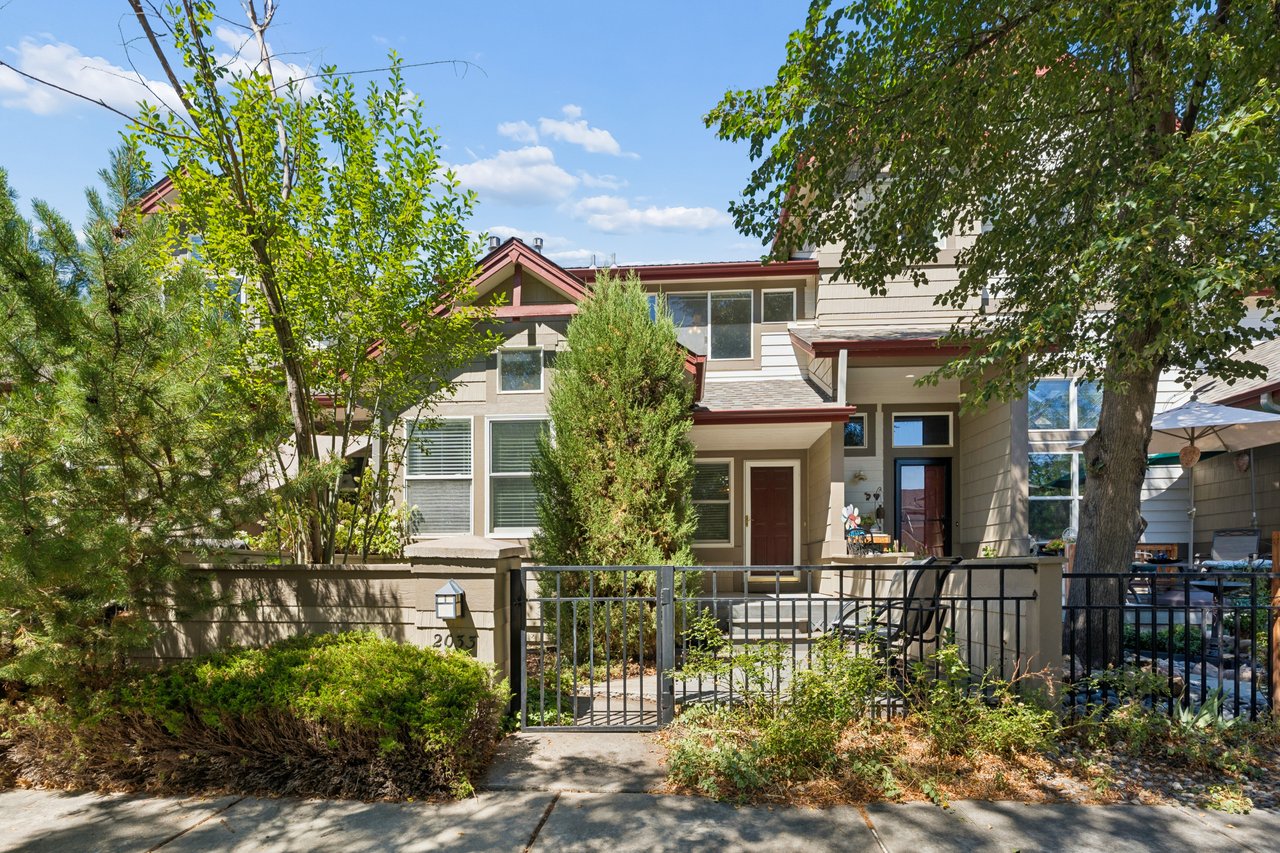
What happens if you write a full-price offer on a hundred-year-old Boulder Victorian, waive your inspection contingency because the seller already had the roof redone, and then discover after closing that repainting the porch requires a permit almost no other Colorado buyer has ever heard of?
That is the version of this story that plays out in Boulder more often than people expect, and it has nothing to do with the home's condition. It has to do with a rulebook that governs everything from window replacement to porch lattice on roughly 1,300 properties across the city, a rulebook that runs on its own calendar and doesn't show up anywhere on the state's standard seller disclosure form. If your next purchase or listing sits inside one of Boulder's ten historic districts or carries individual landmark status, the thing that actually catches people off guard isn't whether they're allowed to buy the house. It's how long they'll wait before they're allowed to change it.
The clock starts with a form nobody budgets time for
Any exterior change to a landmarked property or a home inside a historic district requires a Landmark Alteration Certificate before work begins. That covers the obvious things, re-roofing, additions, fences, and the less obvious ones too: repainting, solar panels, even removing a mature tree. There's no fee to apply. The timeline depends entirely on who has to sign off.
If city staff or the Landmarks Design Review Committee approves your application in one round, expect two to four weeks. Every additional round of revisions adds two to three more. If your project is significant enough that it needs a hearing before the full Landmarks Board, the window stretches to six weeks and sometimes three months, and that board meets exactly once a month, the first Wednesday, with applications due 28 days ahead of time. Miss that window by a day and you're waiting for next month.
You can see this machinery running in real time on this week's LDRC agenda. On September 16, the committee is reviewing an application to replace porch steps and repaint a contributing home at 827 Pine Street in Mapleton Hill, filed by Annlee Landman, alongside a separate application from Peter D'Antonio to replace five windows and add mechanical equipment at an individually landmarked Craftsman and Tudor style house on 11th Street. Neither is a controversial project. Both still have to clear the same process a much larger renovation would. The committee handles more than 200 of these applications a year, which tells you this isn't a rare bureaucratic ambush, it's a routine part of owning one of these homes, and it needs to be priced into any closing timeline that assumes work can start the week after keys change hands.
What the tiers actually look like
| Project type | Review level | Typical timeline |
|---|---|---|
| Standard exterior change, approved first round | Staff or LDRC | 2 to 4 weeks |
| Same project, revisions requested | Staff or LDRC | Add 2 to 3 weeks per round |
| Project referred to a public hearing | Landmarks Board | 6 weeks to 3 months |
| New individual landmark designation, owner-initiated | Landmarks Board then City Council | 3 to 7 months total |
| Demolition of a non-designated building over 50 years old | Staff, possibly Landmarks Board | 3 weeks initial review, up to 180-day stay if elevated |
An approved Landmark Alteration Certificate is only good for one year and can't be extended. If a buyer's permit isn't finalized in time, they start the application over.
When it isn't the owner's call to make
Most of the time, the property owner is the one filing the application and setting the pace. That isn't always true, and the exceptions are worth knowing before you're the one holding a contract that depends on a demolition permit.
In February 2026, Boulder's Landmarks Board voted 4-1 to initiate landmark designation on a nearly century-old Craftsman bungalow at 990 Arapahoe Avenue, a property Presbyterian Manor had planned to demolish, along with three neighboring homes, to build an expansion of affordable senior housing. The vote didn't finalize anything. It froze the demolition while a full designation hearing proceeds, with City Council holding final say. Board member Chelsea Castellano cast the lone dissenting vote and told Boulder Reporting Lab that the process had effectively stalled a housing project the surrounding community had shown up in favor of. That's the version of this rule that a buyer or developer needs to model into a pro forma: designation review can be triggered by the Landmarks Board itself, not just by the person who owns the deed, and it can pause a deal that already has momentum on a parallel planning track.
Institutional owners with in-house architects aren't exempt from the same steps, either. Naropa University's application to relocate two individually landmarked structures, the Chestnut House and the Arapahoe House at 2106 Arapahoe Avenue, went through the same quasi-judicial Landmarks Board hearing process as anyone else's porch repaint, represented by Sopher Sparn Architects. The process doesn't scale down for small projects or up for well-resourced ones. Everyone gets the same queue.
What the disclosure form won't tell you
Colorado's Seller's Property Disclosure form became mandatory in its current version on January 1, 2026, running fourteen pages across eighteen sections, and it asks sellers to describe known adverse material facts to their current actual knowledge as of the day they sign. It's a thorough form. It has a line for radon test results, one for shared well agreements, one for methamphetamine lab history.
It has no line for landmark or historic district status, because that isn't treated as a property defect. Colorado courts have generally held that sellers don't have a duty to disclose facts that already sit in the public record, and Boulder's landmark and historic district map is exactly that: a searchable public database, free to check, that tells you in seconds whether a given address carries restrictions on exterior work. The practical result is that the responsibility to check quietly shifts to the buyer, and to any agent helping that buyer plan a renovation budget before the inspection deadline passes. If you've priced a project around new windows or a rear addition, that's the moment to search the address, not the week the permit gets denied.
The incentive that got meaningfully better
The financial case for taking on a landmarked home improved in a way that's easy to miss if you last checked a few years ago. Colorado's residential historic preservation tax credit refunds 20 percent of qualified rehabilitation costs, and the cap on that credit doubled, from $50,000 to $100,000, for credits awarded starting January 1, 2025, under House Bill 24-1314. The credit can be spread across ten years and resets if the property changes hands. A $200,000 restoration still nets the same $40,000 credit it would have under the old cap, since that number never approached either ceiling. Where the higher cap actually changes the math is at the top of Mapleton Hill's renovation range, a full exterior restoration on a Victorian there can run $150,000 to $400,000, and a project at the high end of that range can now claim a materially larger credit than it could two years ago.
Two sequencing details matter more than the credit amount itself. First, you cannot submit a preliminary application for a project that's already finished, a rule that took effect in 2025, so the paperwork has to happen before or during construction, not after. Second, only costs incurred within a limited lookback window before the application count, so a buyer who plans to spend a year gathering contractor bids before filing anything risks losing eligibility on the early spending. There's a separate benefit worth knowing about too: a sales tax waiver on construction materials is available once an approved Landmark Alteration Certificate is in hand, as long as at least 30 percent of the material value goes toward exterior work. The federal 20 percent credit, by contrast, only applies to income-producing use, so it reaches a rented carriage house or accessory unit but not an owner-occupied primary residence.
Costs run higher too. Historically appropriate window replacement typically runs $800 to $1,500 per window against $300 to $600 for a standard swap, one of the clearer illustrations of why these homes cost more to maintain than their non-designated neighbors.
The sale that answers the value question
The recurring worry among sellers is whether any of this caps what a landmarked home can fetch. Boulder's own review of the economic research suggests designation tends to maintain or increase property values rather than suppress them, and one recent transaction makes the point without much need for interpretation. In March 2026, a 10,060-square-foot property at 700 Highland Avenue in Mapleton Hill, built in 1898 as a Seventh-Day Adventist church and later converted into a six-bedroom residence, sold for $17,996,428 according to Boulder County property records reported by BizWest. It had last sold in November 2015 for $4.9 million. The deal closed off-market, and the seller's agent declined to comment on it, a detail that says less about designation limiting the buyer pool and more about how thin and guarded that pool tends to be at the very top of Boulder's historic inventory. Designation didn't cap the number. It shaped who was willing to sit through the process to get there.
A few direct questions
Does interior work need Landmarks Board approval too? No. Boulder's review authority covers exterior changes and new freestanding construction over 340 square feet. Interior renovations, as long as they don't alter the exterior appearance, fall outside the Landmark Alteration Certificate process entirely.
Does landmark status change my property tax bill? No. The city's own guidance is explicit that landmark designation has no bearing on zoning, allowed uses, or the property tax assessment. Those are calculated on separate criteria.
What happens if my Landmark Alteration Certificate expires before I pull a permit? You file a new application and start the review clock over, which is exactly why sequencing the LAC application, the contractor bids, and the closing timeline in the right order matters more on these properties than almost anywhere else in Boulder's market.
If you're weighing a purchase inside Mapleton Hill, Chautauqua Park, Downtown, Highland Lawn, University Place, West Pearl, Chamberlain, or any of Boulder's other historic districts, or you're preparing to list a landmarked property and want the renovation math and the disclosure timeline built into your pricing strategy from day one, The Bernardi Group has walked clients through exactly this process. Start Your Strategy Session and we'll map out what the calendar actually looks like before you're under contract, not after.